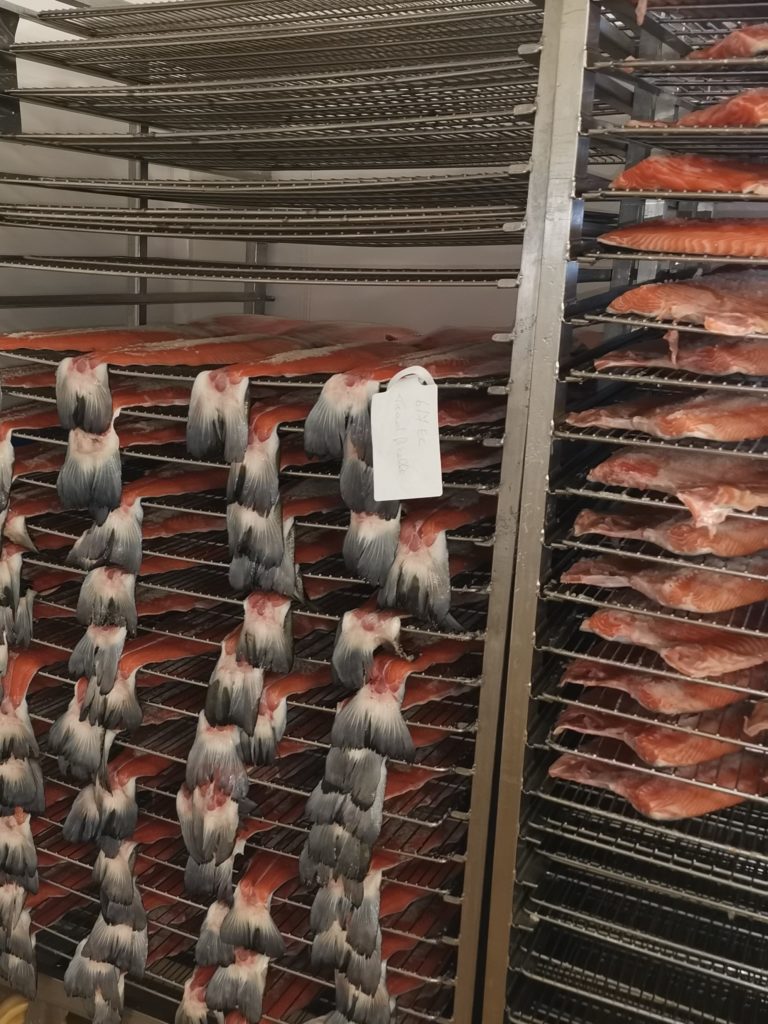
Making the most of food by-products : 3 common mistakes to avoid
We focus on profit margins.
The system, however, eats up cash.
The starting point is not the resource. It is the industrial model, which is often scaled up too early and implemented in the wrong order. One mistake leads to another. Always in the same sequence.
Here is an example from the seafood sector, but these mechanisms are found in most of the food by-product valorisation projects we analyse in the field.
Mistake No. 1 — The flow is not under control
In a project to recover by-products from the agri-food industry, everything hinges on the flow. Without a controlled flow, nothing works.
A by-product is not an asset. It is a cost from the moment it arrives. Multi-site collection, variety of species, immediate stabilisation. These costs precede every tonne processed.
Three months of flow. Nine months of inactivity.
The unit is installed. The food-grade process is validated. The teams are trained. Then the season ends. The raw material disappears, the plant remains, the costs continue.
Line at a standstill, teams on standby, cash flow under pressure, with no production.
Upon arrival from sea, time is counted in hours. Without immediate stabilisation, the raw material spoils. Loss of food-grade status, downgrading, processing costs.
The economic decision is already made even before the first cycle.
You have sized the equipment before validating the actual flow.
Before any CAPEX for by-product recovery: actual volumes, week by week, over twelve months. Not estimates, but usable flows.
Mistake No. 2 — The market is not stable
It is the supply flow that determines the market. Or excludes it.
When it comes to adding value to food by-products, an unstable supply flow makes any contract impossible.
Not just gradually. But structurally.
An industrial buyer will not commit to an irregular supply. Without regularity, there is no contract. Without a contract, there is only spot trading. Low prices, uncertain volumes, no visibility.
The selling price is visible. The real cost only becomes apparent later. A continuous cold chain, a buyer qualification process spanning several months, repeated quality checks. These costs add up and are non-negotiable.
On the other hand, the buyer calculates per kilo within a narrow range. The product is compliant. The price is not acceptable.
The market does not arbitrate. The flow has already arbitrated.
An identified outlet is not a secure outlet. The flow decides before the buyer.
Mistake No. 3 — An inaccurate estimate of capital expenditure
A poorly defined workflow. Uncertain market prospects. Inflated capital expenditure figures.
The project revolves around a product. The business model has been optimised, the prototype validated, and the business plan finalised. Then operations begin and certain problems arise.
Always the same ones.
A batch rejected due to a break in the cold chain.
A missing certification blocking the first delivery.
An unplanned audit at a supplier delaying the launch by several months.
These costs are neither exceptional nor unforeseen. They had been identified. They were not taken into account.
Because the workflow was not consolidated. Because the market was not secured. At this stage, the focus remains on the product, never on operations.
Direct consequence: underutilisation of production lines, cost overruns, a shift towards less demanding and less profitable markets.
The value has not disappeared. It was never realisable within this model.
A co-product valuation model incorporating all costs can work. The same model, lacking these elements, has never been viable.
Conclusion
First the flow, then the market, then the business model.
In that order.
Starting with anything else is like building things backwards. This is the most common scenario in projects aimed at adding value to food by-products.
The question is not whether your by-product has value.
The question is whether your business model allows you to capture it.
If it does not, it has never been feasible within that model.
It is at this stage that an external assessment, based on your actual flows and target markets, makes all the difference.